Genre: Non-Fiction
Category: Philosophy
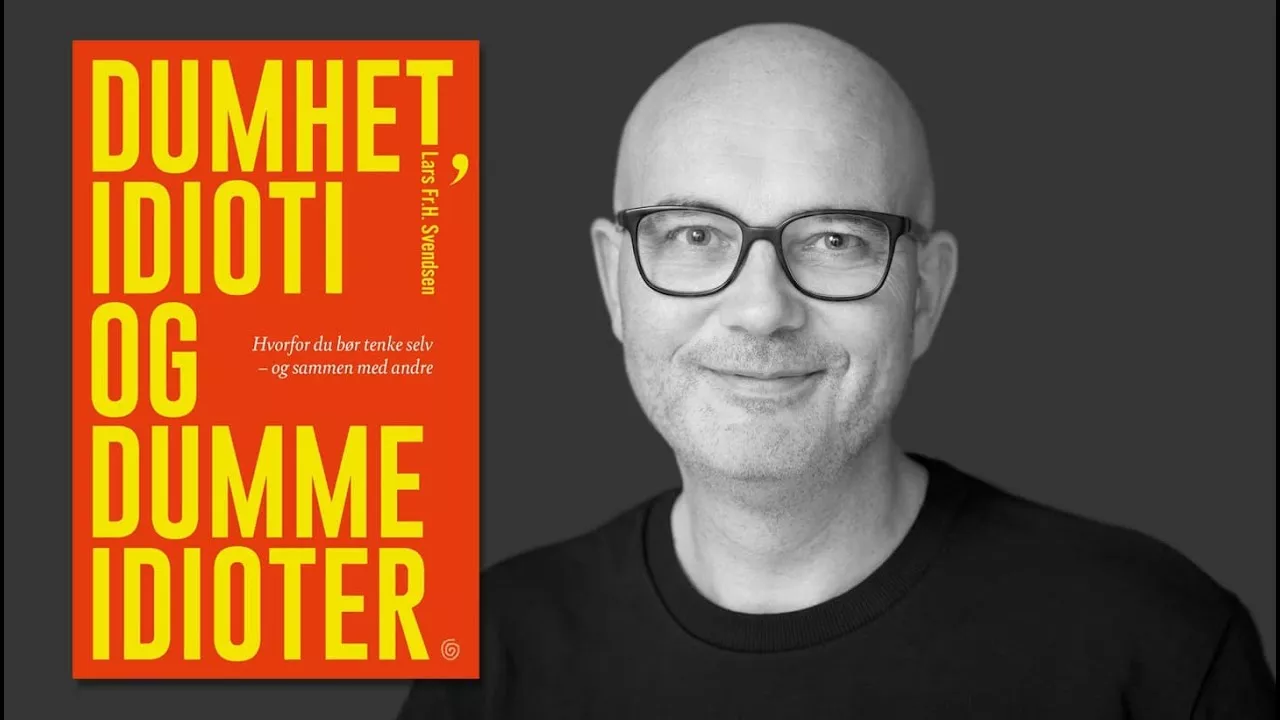
Publisher: Kagge Forlag
Year: 2024 Pages: 142 ISBN: 9788248936688
The Hungarian edition was published by Figura Könyvkiadó in September 2026. It runs to 132 pages and is priced at HUF 5,199.
It has become a cliché to say that we live in a post-truth age, when facts are reduced to matters of opinion, propaganda passes for reality, and stupidity reigns supreme. Will artificial intelligence make us think even less? According to Terry Pratchett, if someone installed a switch in a cave labelled “End-of-the-World Switch. PLEASE DO NOT TOUCH!”, “the paint wouldn’t even have time to dry” before someone pressed it. Lars Fredrik Händler Svendsen believes that few of us are quite that idiotic, but all of us are stupid.
Svendsen is an internationally acclaimed Norwegian philosopher and professor at the University of Bergen. His previous books on boredom, fear and loneliness have enjoyed international success. This time, he turns his attention to the darker side of human thought, using a simple but surprisingly useful threefold distinction: the stupid person fails to think; the idiot thinks badly; and the stupid idiot clings to their own misconceptions as though they were immutable truths. According to Svendsen, we are all born stupid; we become idiots when we begin to doubt; but the third stage can, and should, be avoided.
In the book’s short chapters, the ideas of Kant, Montaigne, Flaubert, Musil, Hannah Arendt and Bonhoeffer mingle with tragicomic episodes from everyday life. We meet a Canadian lawyer who attempted to demonstrate, from the twenty-fifth floor, that a window was unbreakable (the glass held, but the frame did not); a student who believed that scientific laws were “made by the king”; Steve Jobs, whose genius did not prevent him from choosing alternative treatments over surgery; and Mao, whose campaign to exterminate sparrows left China having to import a quarter of a million of them from the Soviet Union.
The confusion of correlation with causation provides some equally memorable examples. In the United States, as cheese consumption rises, so does the number of people who die after becoming entangled in their own bedsheets. Meanwhile, deaths from heart disease in Norway actually declined during the German occupation. Does that mean eating too much cheese will cause you to suffocate in your pillow, while Nazism is good for your heart?
The essence of the book can be summed up in a single sentence: “You’re not stupid because you’re wrong. It’s how you’re wrong that determines whether you’re stupid.” This raises several questions. What is our opinion worth on subjects we know nothing about, and why do we nevertheless feel obliged to have one? Where does healthy scepticism end and outright denial begin? And what are we to make of “emocracy”, where debate is reduced to a contest over who feels what?
Svendsen sees the antidote in dialogue, particularly with people who disagree with us, because “you are entitled to your own opinions, but not to your own facts”. Even that, however, is no help with the stupid idiot, who is “Teflon-coated”: nothing sticks. He also has something to say about artificial intelligence: “ChatGPT, in short, is stupid but effective.”
Throughout the book, Svendsen gently but persistently turns the mirror on his readers. This is neither a polemic nor a collection of anecdotes inviting us to revel in other people’s foolishness. It is a witty, biting and surprisingly self-critical read for anyone who enjoys calling other people stupid.